Mostrando postagens com marcador Loricariidae. Mostrar todas as postagens

quinta-feira, 19 de novembro de 2015

Epoxide Hydrolases

Epoxides are harmful cyclic ethers produced or introduced in biological system.

Epoxide Hydrolase (EH) is gene family present in all domains of life, which catalyses the hydration reaction of epoxides and turns the toxic epoxides into compounds less toxic, more soluble and easier to eliminate.

In mammals, EH genes are classified into five subfamilies: microsomal cholesterol 5,6-oxide hydrolase, hepoxilin A3 hydrolase, leukotriene A4 hydrolase, soluble epoxide hydrolase (sEH), and microsomal epoxide hydrolase (mEH). Two of those have toxicological relevance: the mEH and the sEH. The mEH is the principal enzyme in the metabolism of epoxides xenobiotics. The N-terminal region of this proteins is transmembranal, and the catalytic site is located at the C-terminal. The sEH has a complementar function in the metabolism of epoxides xenobiotics, and both N-terminal and C-terminal are catalytic sites.

For more information about the EH, please refer to the great paper from Fretland et al. 2000, entitled "Epoxide hydrolases: biochemistry and molecular biology" and published at Chemico-Biological Interactions 129, 41–59.

In the 16 transcriptomes we have sequenced, 186 EH were found. Of those, 108 sequences are from soluble EH and 78 from microssomal EH. There are 55 sequences with <75% of the coding sequence (CDS); 36 mEH and 18 from sEH. We are currently looking for evidences of episodic diversifying selection in those sequences and exposing selected species to evaluate the regulation of loricariids EH to xenobiotics.

domingo, 18 de outubro de 2015

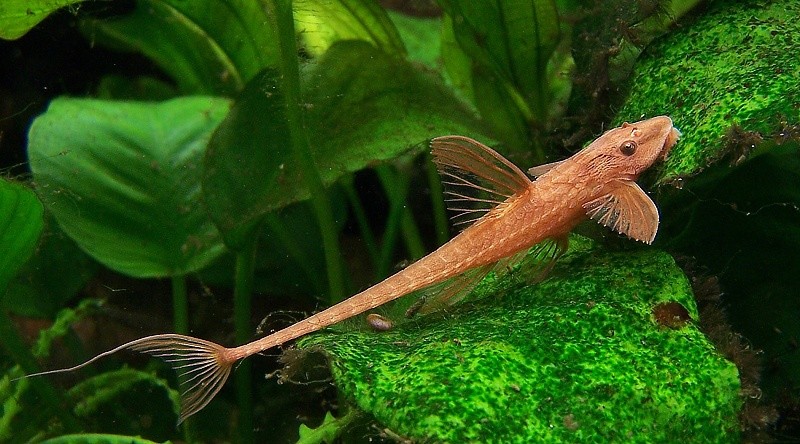
Rineloricaria

The Rineloricaria is a genus of Loricariidae with about 65 valid species distributed in the Central America and South America, making them the most diverse genus of this family. They are known as whiptail catfish because of the filament that grows out in caudal fin, it is typical from this genus.

They are characterized by a narrow body, dorsal and ventral rays produced in a filament, abdomen completely covered with platelets and have sexual dimorphism; males have hypertrophied odontodes on the top of head to the predorsal area, on the cheeks and the pectoral-fin rays.

So, this is one more genus we have the transcriptome sequenced and will be used to help us to study the molecular diversity of this large and biodiversity family.


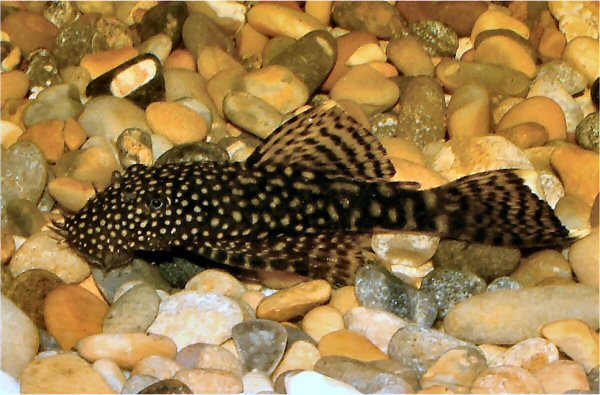
Ancistrus

Ancistrus is a genus of freshwater from the family Loricariidae native to the Neotropical region. This fish has a body covered in bony plates and a ventral suckermouth, as a good Loricariidae. There is a peculiar characteristic associated with this genus: the tentacles located on the head in adult males; females may possess tentacles along the snout margin but they are smaller and they don't have tentacles on the head. They basically feed of phytoplankton and zooplankton, as most of catfishes; and have a special capacity of absorb oxygen from their modified stomach, which allow them to survive in low oxygen conditions.
Now, you known one more cute Loricariidae that is being used in this project to study the molecular biodiversity of this huge family.


quinta-feira, 6 de agosto de 2015

Transcription machinery

Transcription is the initial step in gene expression. The number of genes or the genome size are not related to the complexity of an organism, but instead the ability to express a particular set of genes over a specific period of time and in different tissues allows organismal acclimatization to environmental changes. For this reason, it is extremely important the study of transcription machinery to better understand the evolutionary process.

We have sequenced several transcripts involved in the transcription process in all the 16 Loricariidae species investigated so far. The table below shows the sequenced transcripts according to their classification. Note the abundance of transcription factors. 


A fish? A shark? A cat? Or a dog? Just call me Squali


Knock, knock.

Who is there?


Squaliforma emarginata.

Squali who?

Squaliforma emarginata, a fish of the Loricariidae family. Yes, I have this shark-ish name, but I am indeed a fish, more precisely a catfish

OMG, Squalidae is a family of dogfish sharks! What are you?

I am a catfish that looks like a dogfish shark.

---------------------------------------------

There are around to 13 species of Squaliforma genus, all native from South America. This one was sampled in Manaus, Amazon state, Brazil for our work.

Among the fisherman in Manaus and in portuguese, this fish is known as "bodó de praia", which in a free translation would be "beach suckermouth armoured catfish". The popular name reflect the habit of this to live on sandy beaches along the banks of Solimões river.

The ''bodó de praia'' is trade as ornamental fish.

I hope you enjoyed! 
Bye

quarta-feira, 10 de junho de 2015

The famous Pterygoplichthys anisitsi

Hi all,

We have been talking quite a bit about the first transcriptome sequenced during our project, the one of Pterygoplichthys anisitsi. But, who is Pterygoplichthys anisitsi (Figure 1)?

Figure 1: Pterygoplichthys anisitsi

Ptery, as we friendly call it, is a specie of Loricariid fish distributed over the basins of the rivers Paraná, Paraguay and Uruguay, all of those in the centro-south part of South America (Figure 2). It is characterized by their large dorsal fins with 9 or more fin rays, which distinguish the genera Pterygoplichthys from the genera Hypostomus, that have only 7-8 dorsal fin rays. Ptery also have the body covered with flexible bony plates, the abdomen is almost completely covered in small plates covered with large  spots irregularly and a ventral sucker mouth.


Figure 2: Area of distribution of Pterygoplichthys anisitsi. Figure from http://goo.gl/GY25Ov

Here in Brazil, Pterygoplichthys and other sucker mouth catfishes are known as ''limpa-vidros'' because small of these catfish are used for ornamental purposes, since it feed of the sludge that builds up on the walls of the aquarium.

The exemplar of P. anisitsi used in this work was kindly provided by Prof. Eduardo Almeida, from the São Paulo State University (UNESP) at the city of São José do Rio Preto. Actually, this fish was used in another work that investigate biochemical responses of Ptery to biodiesel, and that was recently published in the journal Ecotoxicology and Environmental Safety. You can see this work here.

That is all for now. Bye!